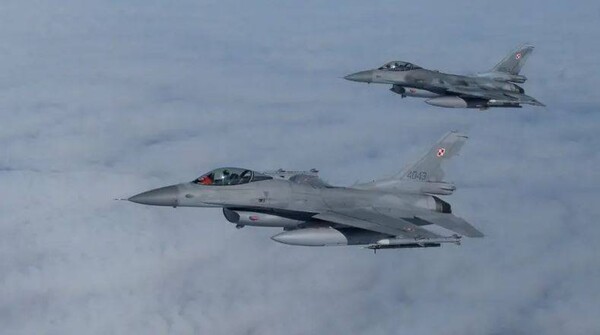
The Polish government took a decisive turn in its security and foreign policy following a sabotage incident attributed to Russian intelligence, which affected a key railway line to Ukraine. Two Ukrainian citizens collaborating with Russian forces were charged but managed to flee to Belarus. In immediate response, Defense Minister Władysław Kosiniak-Kamysz explained that deployed soldiers will reinforce the protection of railways, airports, ports, and other infrastructure vulnerable to the new type of hybrid war that exceeds traditional military scope. Diplomatically, the closure of the Russian consulate in Gdansk, along with previous steps in Krakow and Poznan, aggravates the crisis between Moscow and Warsaw. The combination of explosions, cyberattacks, and infrastructure sabotage has been interpreted as part of a Russian strategy to weaken European defense and pressure NATO's eastern flank. Geopolitical risk is rising in a context where Poland has become an essential logistical hub for shipping aid to Ukraine and has suffered multiple security incidents: according to Poland's Ministry of the Interior, on Sunday there was at least one confirmed act of sabotage and another highly probable incident on the same railway line. For the European Union and NATO, the implications are clear: critical railway, energy, and communication infrastructure has become a direct target in a 'hybrid war' scenario extending beyond the Ukrainian battlefield. Warsaw, November 20, 2025 – Total News Agency-TNA-The Polish government made a decisive shift in its security and foreign policy amid a sabotage blamed on Russian intelligence that impacted a key railway line to Ukraine. Several EU diplomats warn that the Polish attack will be treated as a test of the bloc's unified response. The course the conflict takes will depend on several variables: Russia's capacity for asymmetric response, NATO's response to a member state targeted by sabotage, and the situation of Belarus as a transit zone for saboteurs. Polish authorities announced the closure of the last Russian consulate on its territory and the deployment of up to 10,000 soldiers to protect critical infrastructure under the so-called 'Operation Horizon'. The triggering incident occurred last weekend on the Warsaw-Lublin route near the crossing point to the Ukrainian border, where an explosive device detonated on the track, and another section was identified with damage from possible sabotage. Poland has formally requested the extradition of the two suspects to Belarus, opening another line of direct tension with Minsk and Moscow. Ultimately, the railway sabotage not only caused physical damage but also accelerated a diplomatic and military containment response by Poland. The question now is to what extent Moscow is willing to escalate or back down—and how the European bloc and NATO will respond to the test that the war against Ukraine has also become an offensive on its most vulnerable flanks. In turn, the Prosecutor's Office opened an investigation for sabotage of a 'terrorist nature' benefiting a foreign intelligence service. Kremlin spokesman Dmitry Peskov defined the decision as a consequence of 'Russophobia' and stated that the bilateral relationship is undergoing a total deterioration. Security analysts estimate this case marks one of the most direct confrontations between Russia and a NATO country since the start of the invasion of Ukraine. The deployment of forces and closure of legations show the incident's transformation into a chapter of open confrontation. There were no casualties, but the impact on defensive and logistics transport raised maximum alarm. Polish Prime Minister Donald Tusk called the events an 'unprecedented act of sabotage'.

Poland Boosts Security After Ukraine Railway Sabotage
Poland's government took decisive security measures after a railway sabotage to Ukraine, blamed on Russian intelligence. In response, Poland closed its last Russian consulate and deployed up to 10,000 soldiers to protect critical infrastructure under 'Operation Horizon'.